A Case for the Humble Screened-In Porch
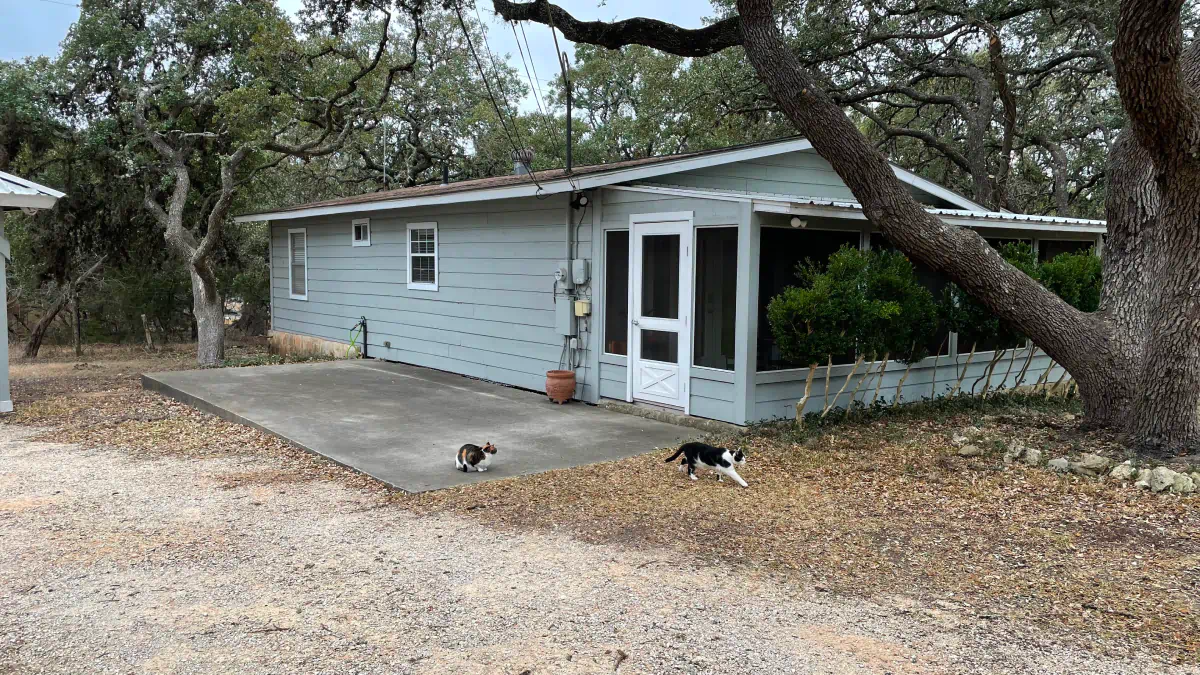
When I bought my house, the porch was rotting. The floor sagged, and the “cover” (I couldn’t call it a roof) was giving up. It was one of those features that showed up in the listing photos from an angle that tried to hide the decay. I didn’t think much about it, as I had bigger problems to solve at the time.
But somewhere in those early months of renovation, I started to notice something. I’d step outside with my coffee, stand there for a minute, and then retreat. Too hot. Too buggy. Too much wind kicking up dust from the gravel drive. The land was beautiful—two and a half wooded acres on the southern edge of Texas Hill Country—but I couldn’t actually be in it. Not comfortably, or at least not for any length of time.
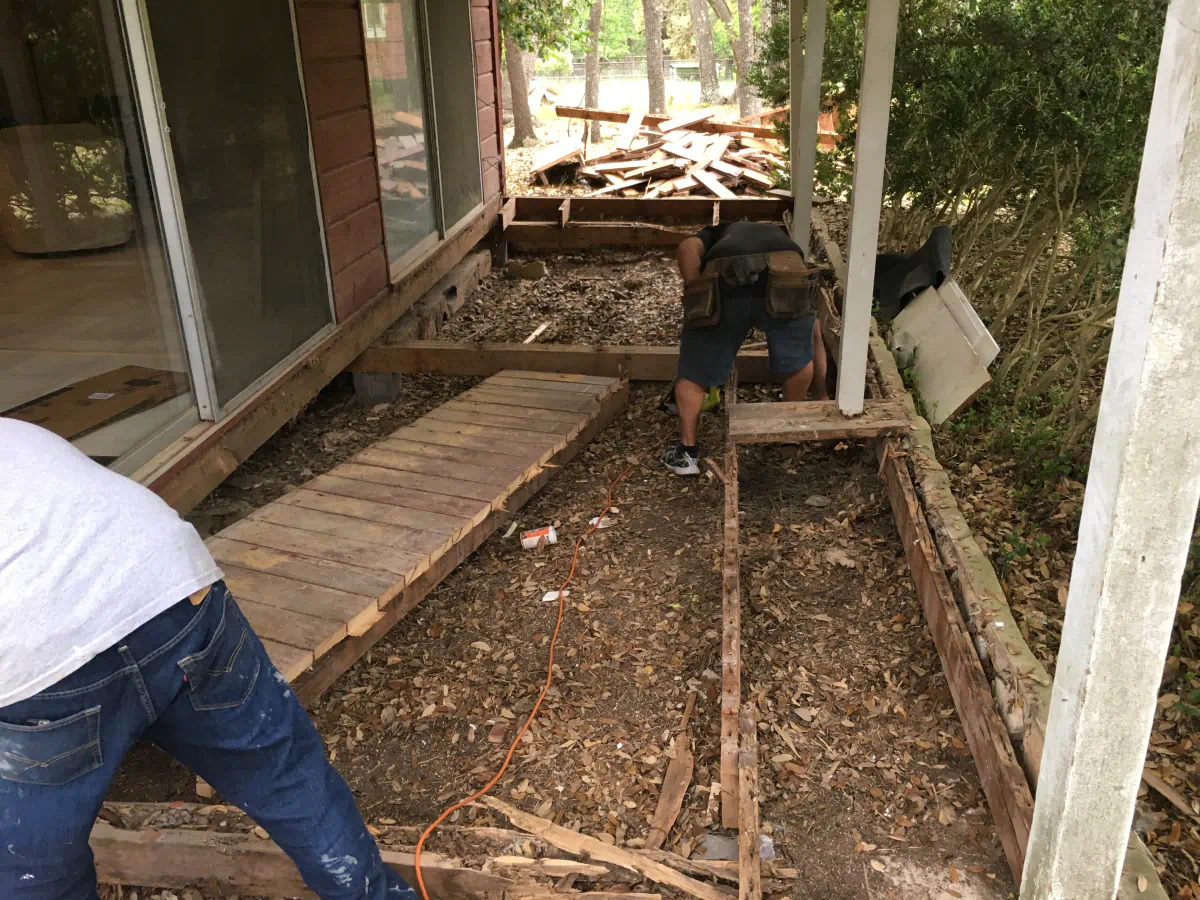
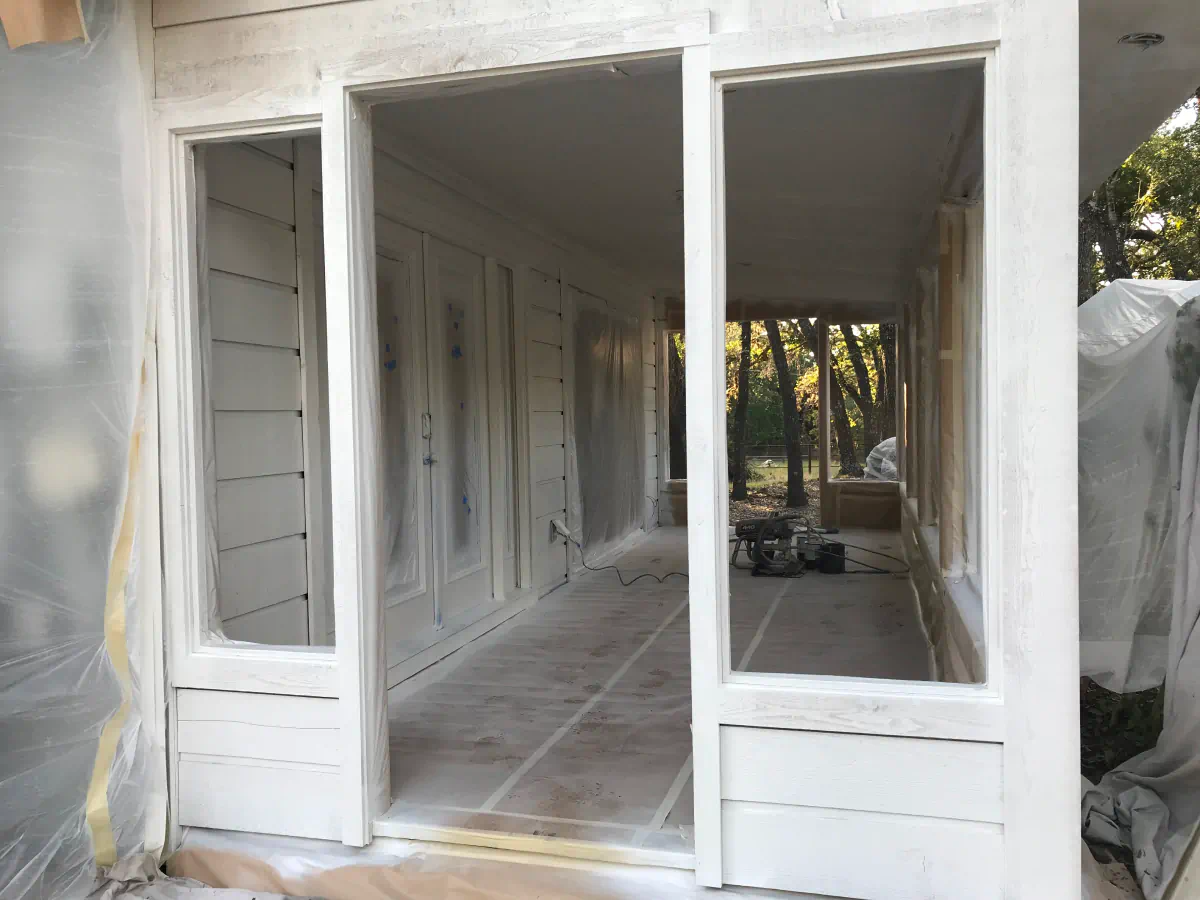
So I had the porch rebuilt. New floor. Sheet metal across the top. Framed it out for screens, though I wasn’t sure yet how serious I was about that part.
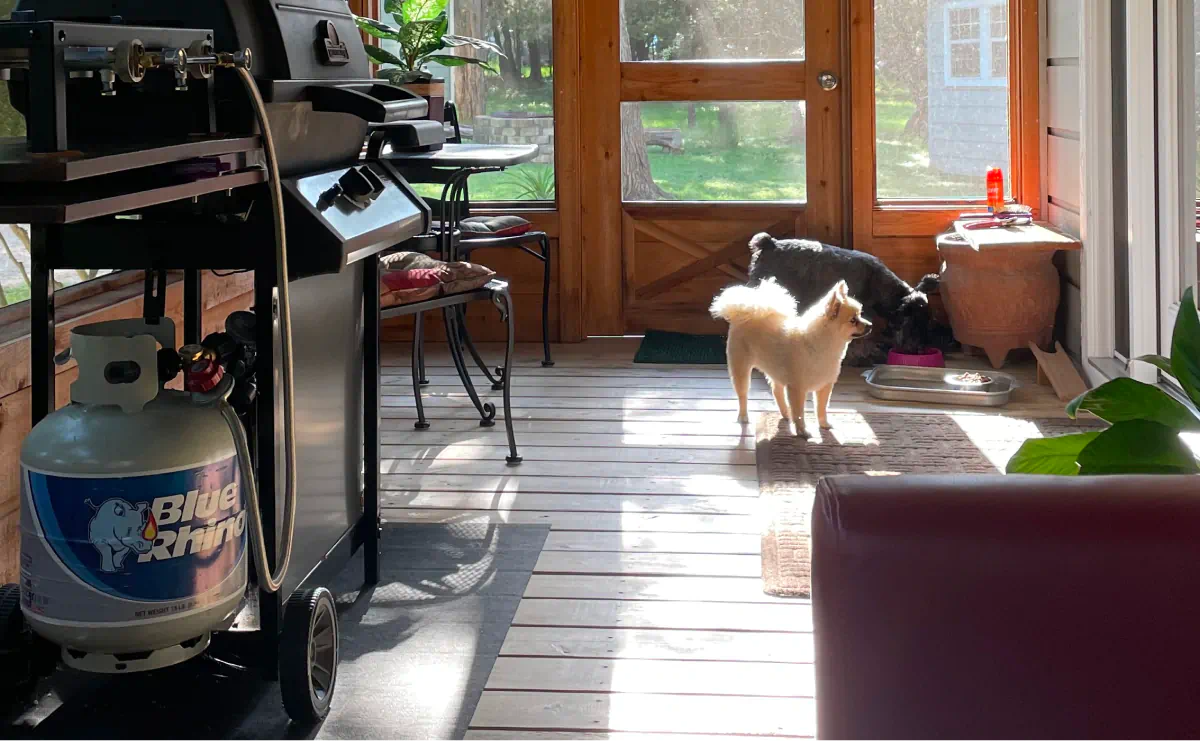
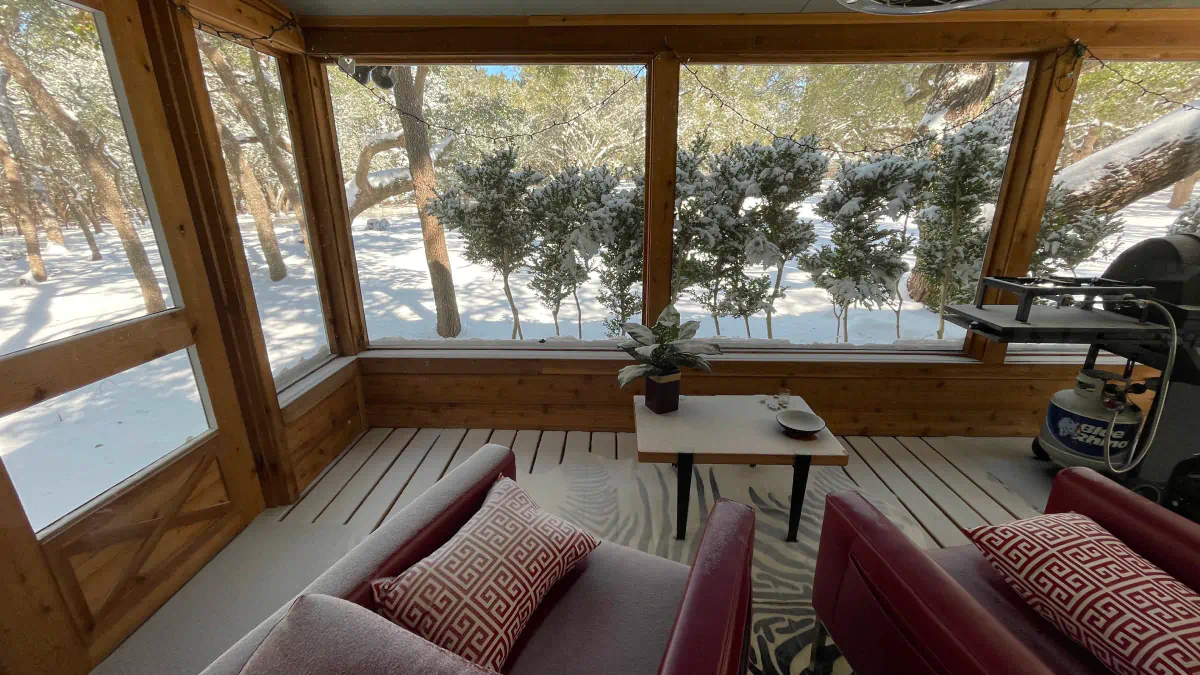
The porch I ended up with is not large. Eight feet deep, twenty-four feet wide. Enough room for two oversized leather chairs, a grill, and a couple of auxiliary burners that function as an outdoor kitchen. That’s it. No dining table. No elaborate outdoor living setup. Just a narrow threshold between the house and the trees, but “Wow!”, it changed everything.
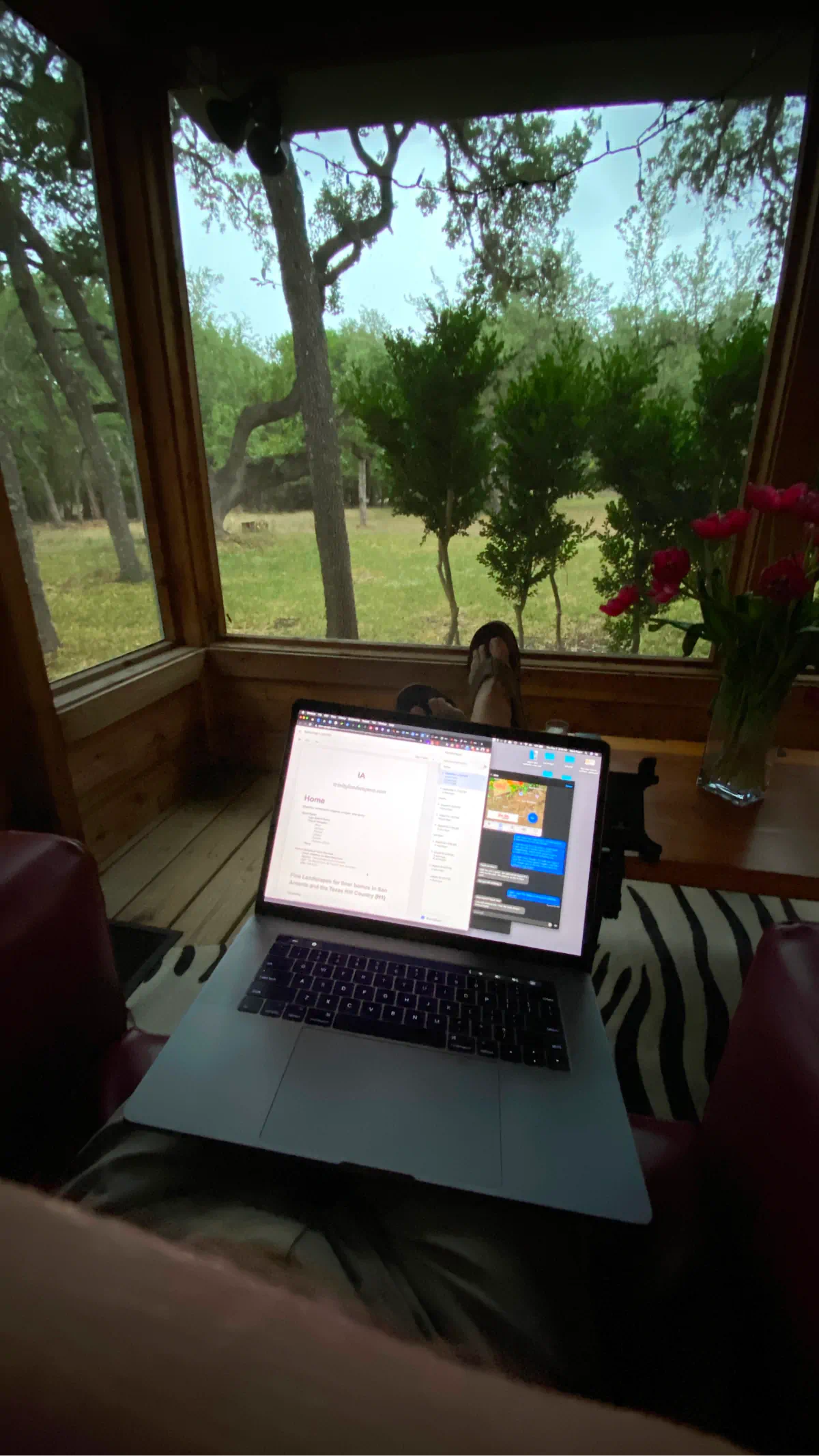
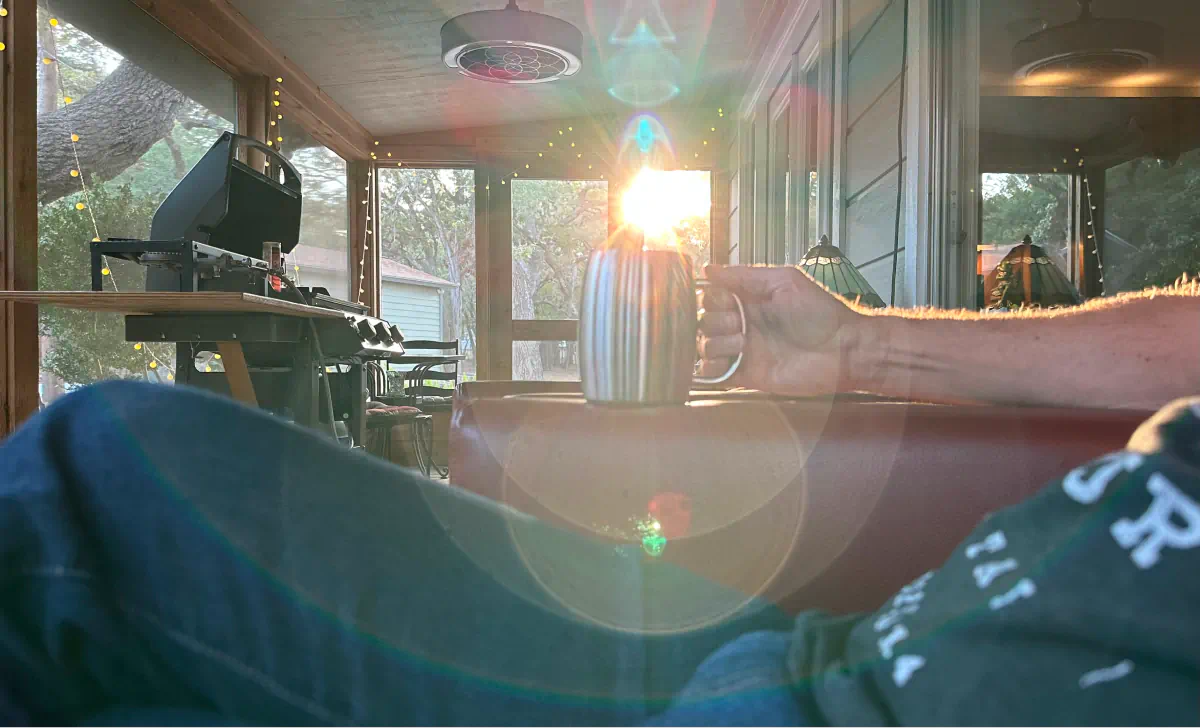
The porch is finished in natural cedar, which does something subtle but important: It extends the feeling of the forest into the space. You’re not sitting in a room that looks out at nature. You’re sitting in nature, just with a screen between you and the mosquitoes. Shrubs grow right up against the front edge. The trees beyond them filter the light. On a good morning, with the coffee hot and the dogs sprawled at my feet, I’m not observing the land. I’m part of it.
“Thunder rolls overhead while sheets of droplets pepper the rooftop and metal porch covering… Mine is a natural hideaway, my ‘cabin in the woods,’ I like to call it.” — Journal, February 2024
This is the thing about a screened-in porch that’s hard to explain until you have one. It solves an ancient human problem. We want to be outside. We evolved outside. But outside has bugs and heat and wind and rain and all the reasons we built walls and roofs in the first place. The porch lets you cheat. You get the birdsong without the mosquitoes. The breeze without the dust. The thunderstorm without getting wet.
I live in a temperate climate, which means almost every month of the year offers at least some window to sit outside comfortably. But “comfortably” is doing a lot of work in that sentence. Without the screens, summer evenings are a negotiation with insects. Without the roof, spring means dodging showers. Without the partial shelter from wind, even a mild day can feel like an assault.
The porch removes the negotiation. It says: You can be here. Stay as long as you want.
Usually that’s what we do.
My wife Claudia spends as much time on the porch as I do—maybe more. Morning coffee, most days. Evening drinks when the light gets soft. In the more pleasant times of the year the grill might get used a couple times a week, and the staging area for the dogs—on their way in, on their way out—has become so natural that I can’t imagine the house without it. The porch isn’t precious. It’s lived in. The leather chairs show the abuse they take from the sun. The grill has grease stains. This is not a showroom. It’s just a room, outside.
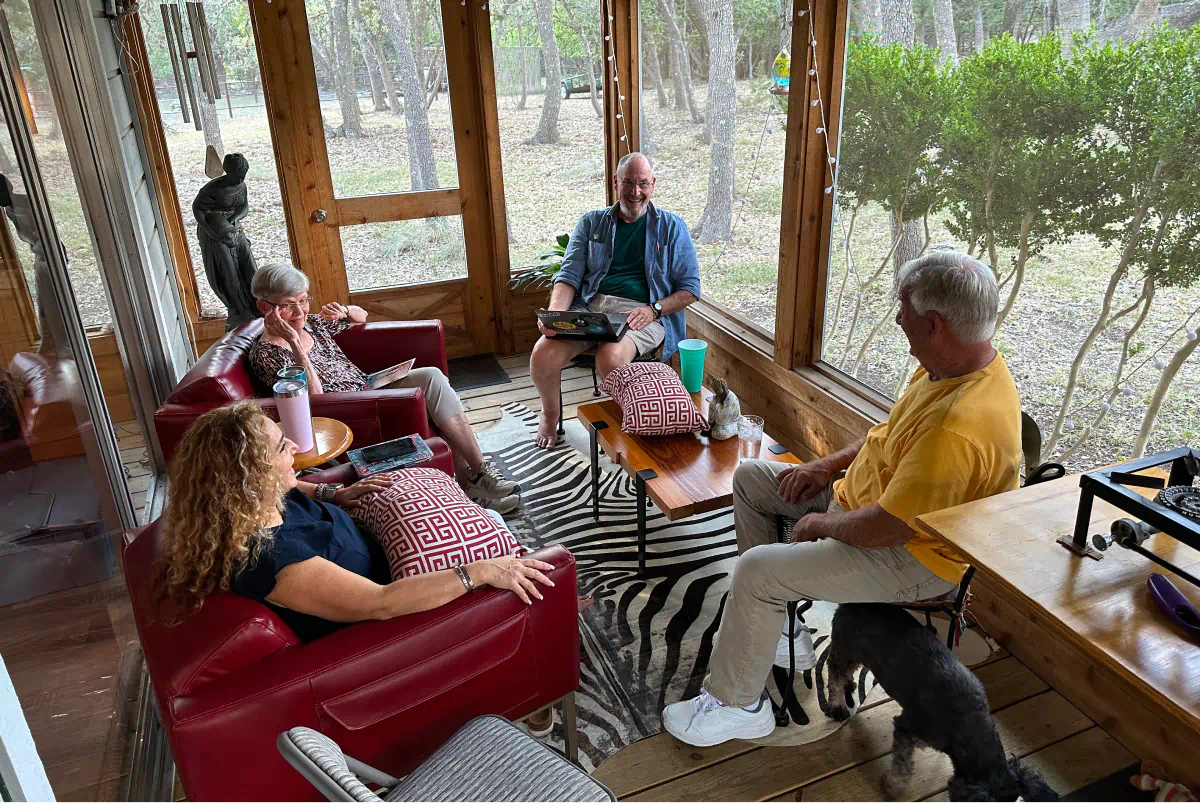
It’s where we’ve made so many memories. Not dramatic ones—no proposals or milestone announcements. Just the accumulating kind. Conversations that went longer than expected. Storms watched from the dry side of the screen. Dinners that started on the grill and never made it to the dining room. The porch has become the place where our life together actually happens, more than any room inside the house. I didn’t anticipate that when I framed it out for screens. But it’s the thing I’m most grateful for.
“A cozy house with an even cozier porch, a beautiful view on a perfect early fall evening, a chorus of crickets, two sleeping dogs, and the most amazing wife a man could ever hope for.” — Journal, October 27, 2025
Engawa
The Japanese have a concept called engawa—the transitional space between inside and outside. It’s not quite a porch in the American sense, but it serves a similar function: a threshold where you’re neither sealed in nor fully exposed. These spaces matter because they change how you inhabit a home. You’re not choosing between climate control and the elements. You’re holding both.
I think we’ve lost this in modern American architecture. Houses are either inside—insulated, air-conditioned, optimized—or they open onto outside, which is often a deck or patio that bakes in summer and sits empty for months. The threshold has disappeared. We go from sealed box to full exposure with nothing in between.
A screened-in porch is a recovery of that in-between. It’s architecturally almost nothing—a roof, some screens, a floor—but experientially it’s everything. It’s where I do my best thinking. It’s where the dogs prefer to nap. It’s where Claudia and I have had some of our best conversations, because something about being half-outside loosens people up.
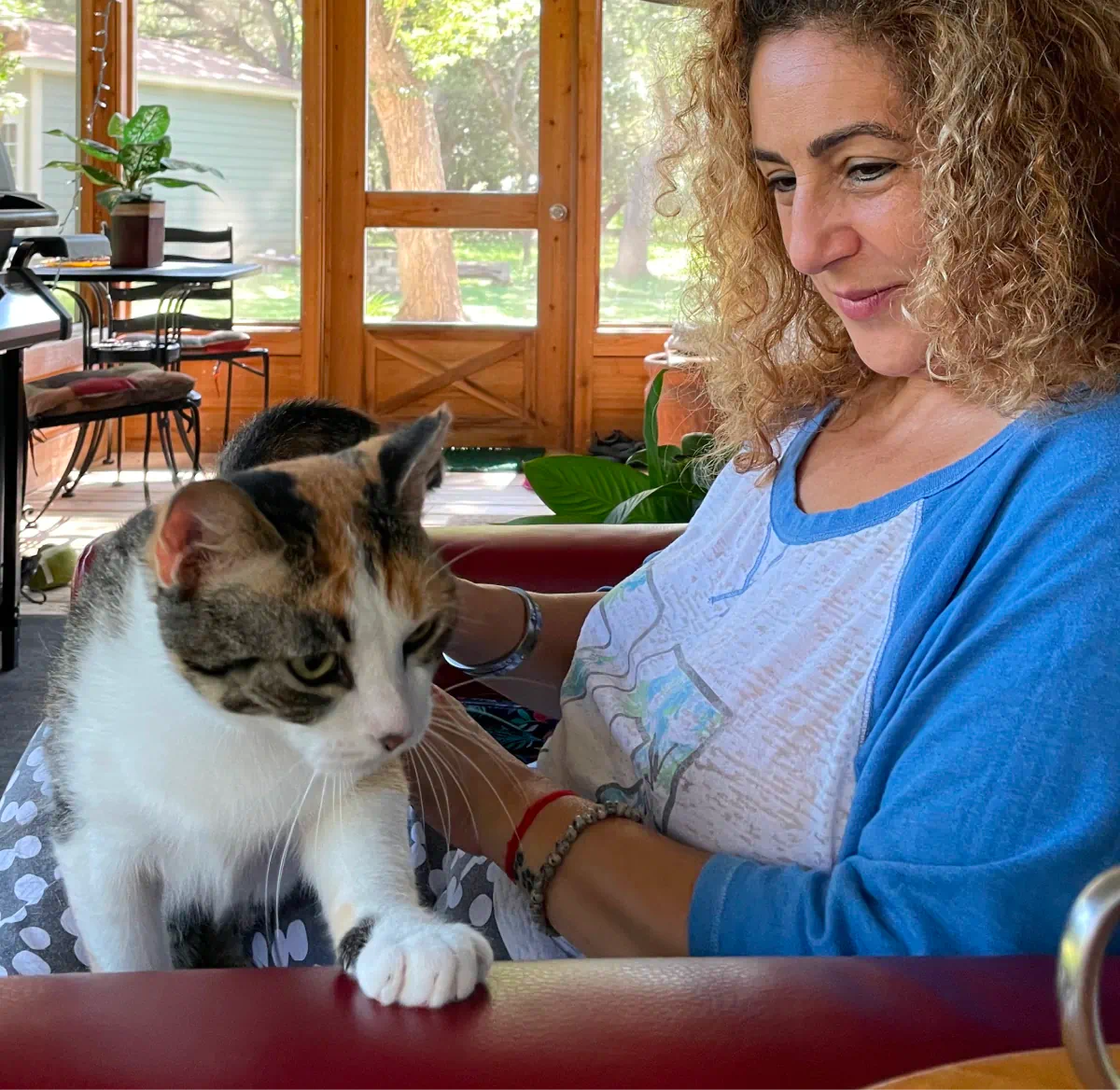
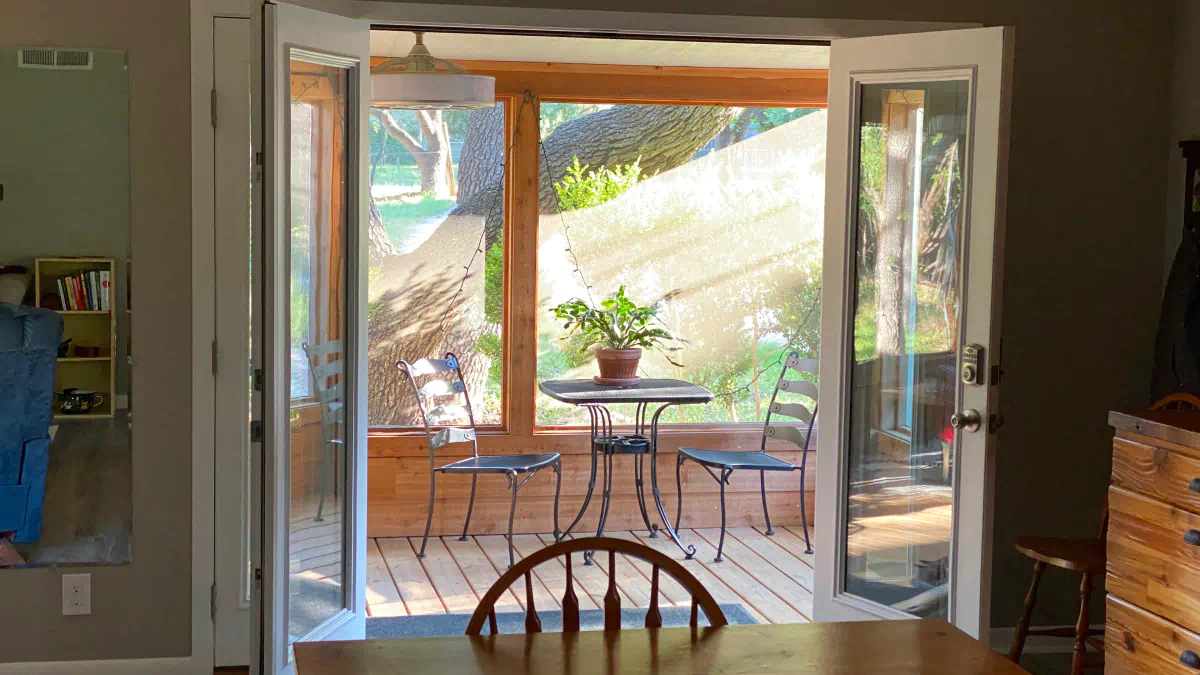
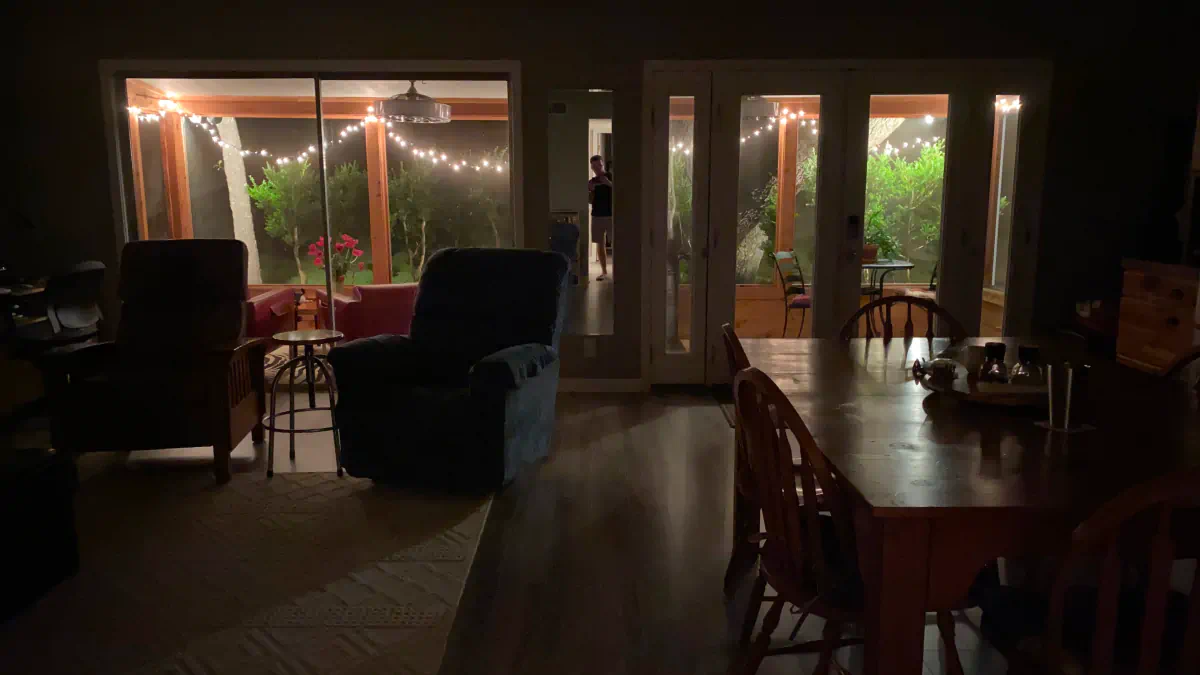
Here’s something I didn’t anticipate: the porch changed the inside of the house, too. Our main living area looks out over the porch and onto the yard beyond. Our two recliners sit facing outward, looking out through an over-sized sliding glass door, toward those big screened openings. On the days when it’s too cold or too wet to sit outside, we still sit where we can watch the trees and the birds and whatever weather is moving through—framed by the porch, softened by it. We keep a string of lights across the porch for gentle illumination at night, so even after dark we’re looking out, not at a reflection of ourselves in a window. The porch didn’t just add a room. It reoriented the whole house toward the land.
Here’s the practical case, if you need one: A screened-in porch costs a fraction of a kitchen remodel or a bathroom addition. Mine was built onto an existing structure that was already falling apart—so the incremental cost of doing it right wasn’t much more than the cost of doing it at all. For that modest investment, I added a room we use almost every day, in a way we use almost no other room.
And here’s the thing I wish more people understood: You might already have a porch that could become this.
I see them all the time—open porches, covered patios, back decks with roofs—sitting empty because they’re not comfortable. Too hot. Too buggy. Too exposed. The furniture fades in the sun and nobody sits in it. These spaces could be transformed. Most existing porches can be retrofitted with screens in some fashion, and the cost is often surprisingly modest. What you get back is not just a porch, but an inhabitable space. A place you’ll actually use instead of walking through on your way into the air conditioning.
The ROI is absurd. Not in resale value—though it probably helps—but in lived value, on those mornings that start a little slower, during the evenings that extend a little later. In the simple, repeatable pleasure of sitting in a leather chair, surrounded by cedar and trees and dogs, feeling like you’re outside under the fan even when the heat index says you shouldn’t be.
I never want to live without a screened-in porch again.
I’ve moved a few times. I’ve compromised on features, because most of us have to on some level. But this one has become non-negotiable—not because it’s luxurious, but because it’s essential. It’s the difference between owning land and actually living on it, between having a beautiful view and being a parcipant in the scene. Or, in simple terms, it just lets a guy be outside more, which is where I prefer to be, especially if I can be comfortable.
If you’ve got the space—or an unused porch waiting to be rescued—consider the screens. It doesn’t have to be big. Eight by twenty-four works fine. What it has to be is there—a threshold, a shelter, a place where you can sit with your coffee and your spouse and your dogs and the trees and the bugs-that-can’t-reach-you, and feel, for a few minutes at least, like you’re exactly where you’re supposed to be.